
How to Eat Ethiopian Food: A Beginner’s Guide to Ethiopian Dining

July 7, 2026
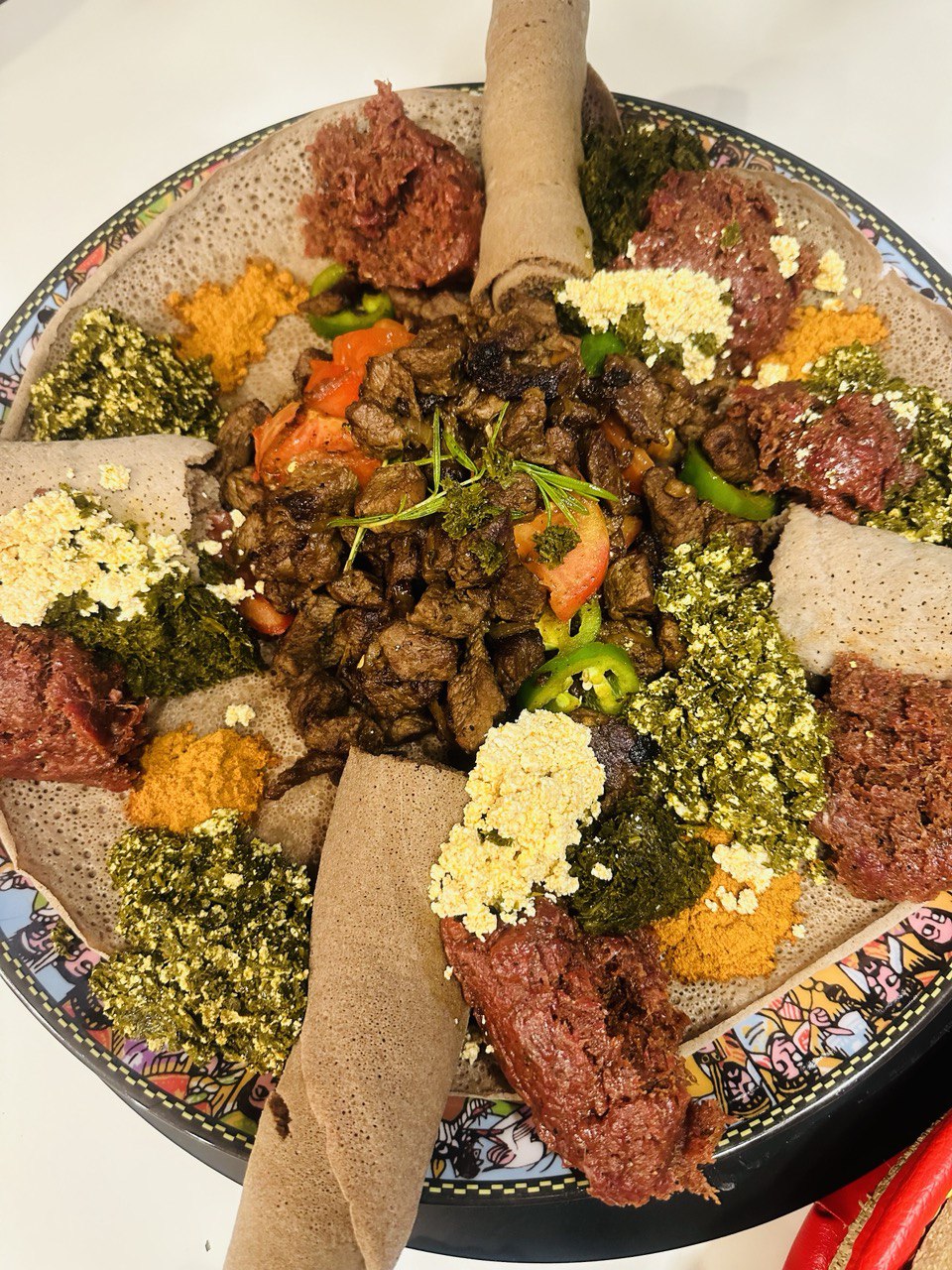
Walking into an Ethiopian restaurant for the first time is an experience unlike any other. Instead of individual plates and silverware, you’ll often find a large round platter placed in the center of the table, covered with colorful stews, vegetables, and a soft, spongy flatbread called injera. If you’re wondering, “How do I eat this?”—don’t worry. You’re about to discover one of the most welcoming and enjoyable dining traditions in the world.
Ethiopian dining is about much more than food. It celebrates togetherness, generosity, and sharing. Meals are meant to bring people closer, turning every bite into a social experience. Whether you’re dining with family, friends, or meeting Ethiopian cuisine for the very first time, knowing a few simple traditions will make your meal even more enjoyable.
Start with Injera

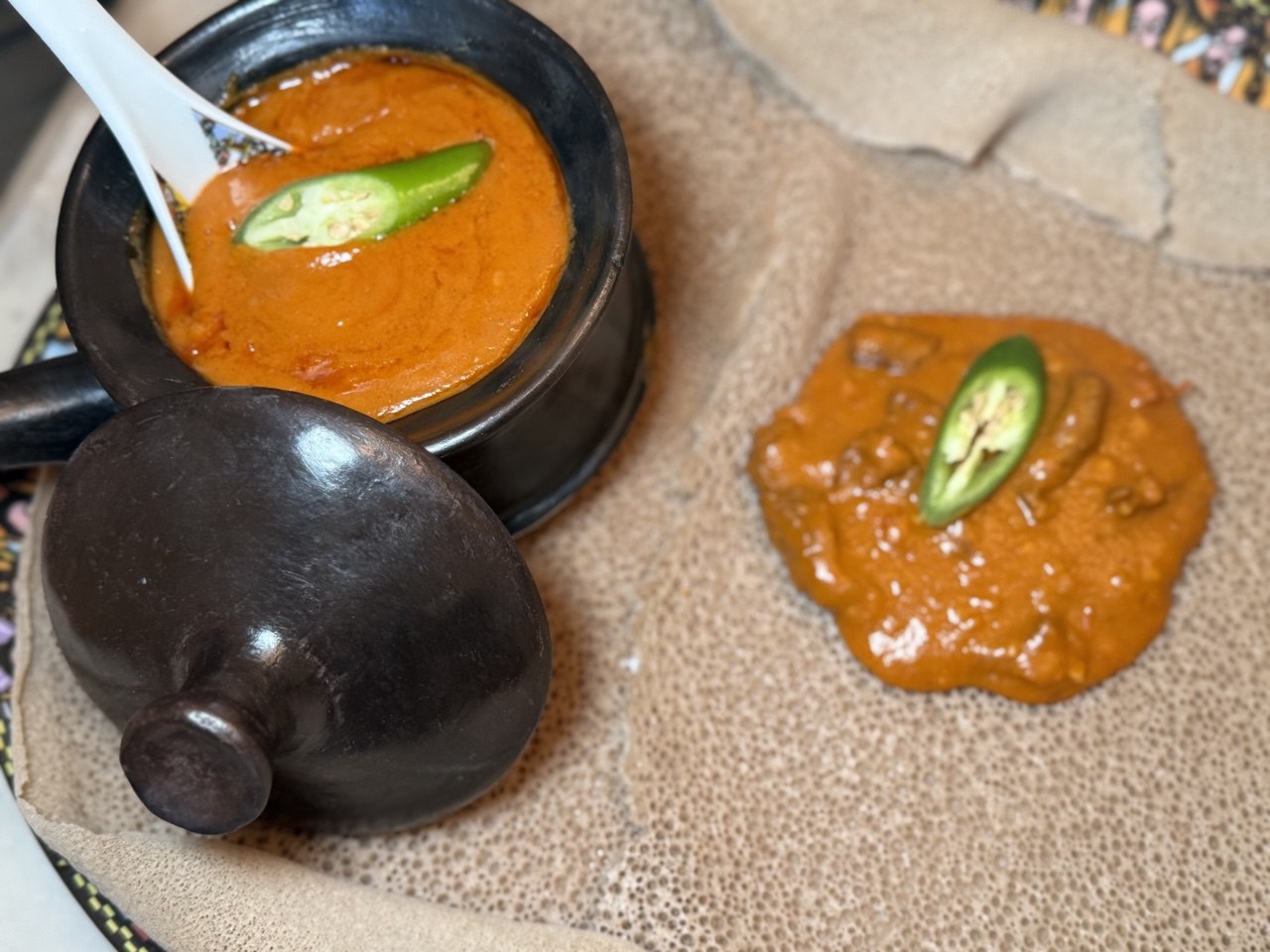
The first thing you’ll notice is Injera, the famous Ethiopian sourdough flatbread. It acts as your plate, spoon, and fork all at once.
Instead of using cutlery, simply tear off a small piece of injera with your right hand, pinch a portion of your favorite stew, and enjoy. The soft, slightly tangy bread perfectly balances the rich flavors of Ethiopian dishes.
Order a Variety of Dishes
One of the best parts of Ethiopian dining is that you don’t have to choose just one dish. Most meals are served family-style, allowing everyone to sample different flavors.
If it’s your first visit, consider trying:
- Doro Wat – Ethiopia’s famous spicy chicken stew.
- Shiro Wat – A creamy chickpea stew loved throughout Ethiopia.
- Misir Wat – Spicy red lentils packed with flavor.
- Tibs – Tender beef sautéed with onions and peppers.
- Atkilt Wat – A delicious mix of cabbage, carrots, and potatoes.
- Kitfo – Finely minced beef seasoned with Ethiopian spices.
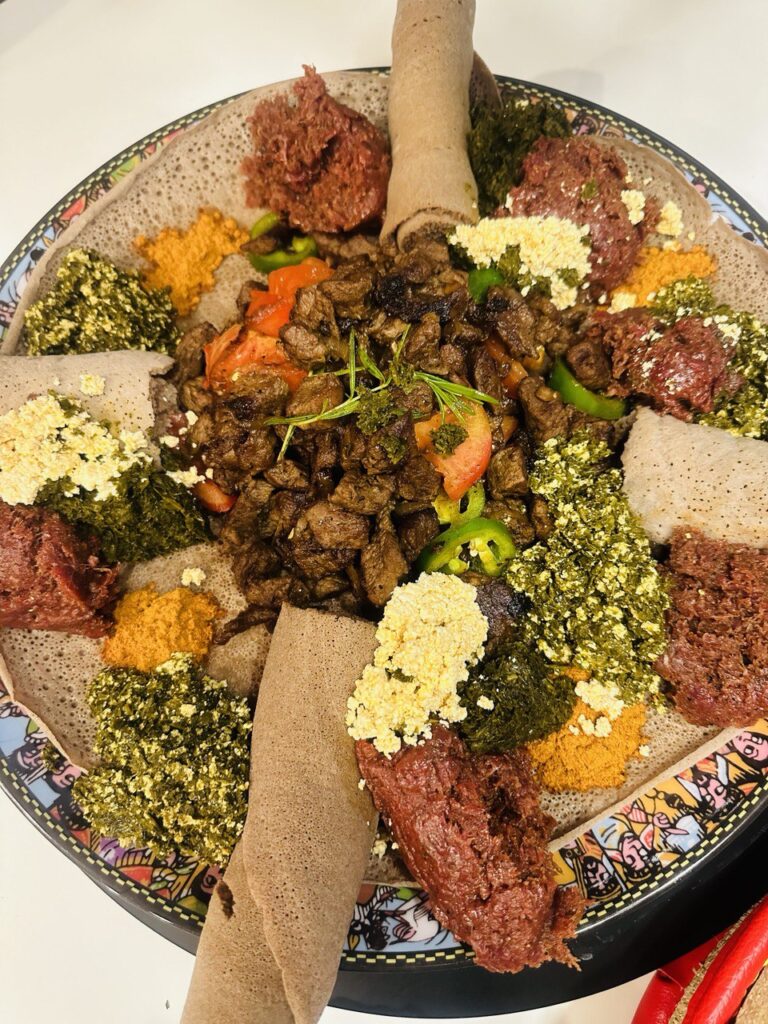
Trying several dishes together is the best way to experience the incredible variety of Ethiopian cuisine.
Eating Together Is Part of the Tradition
Unlike many cultures where everyone has their own plate, Ethiopian meals are designed to be shared.
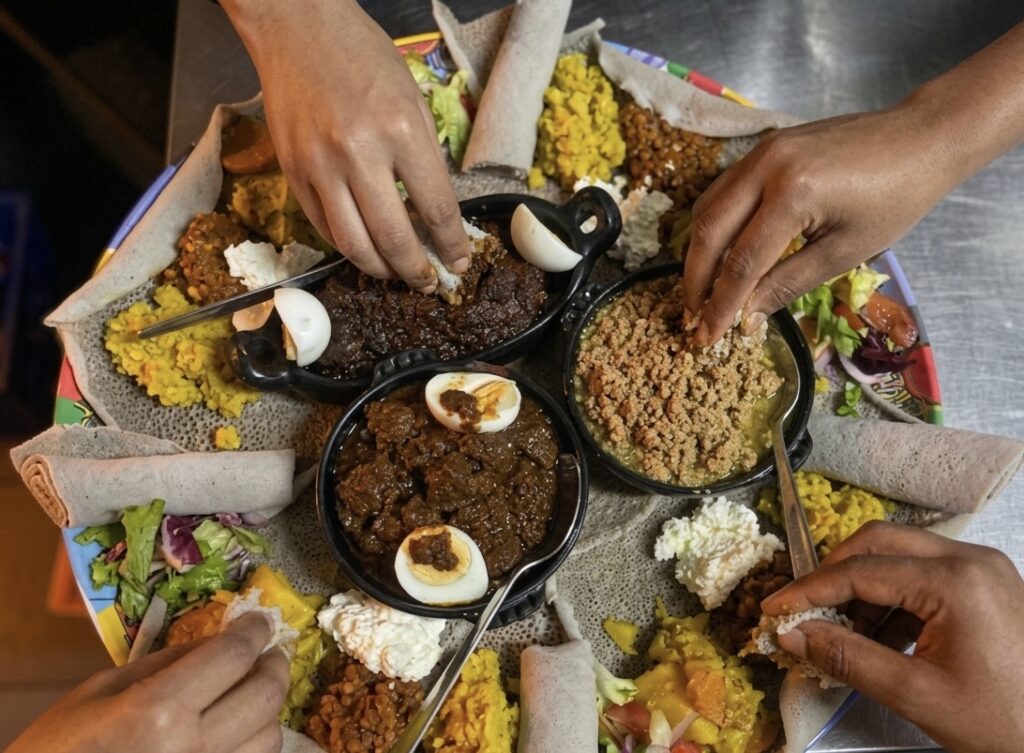
Friends and family gather around one large platter, enjoying the meal together while talking, laughing, and spending time with one another. Sharing food is considered a sign of friendship, hospitality, and respect.
Don’t be surprised if your Ethiopian host encourages you to eat more. Offering extra food is a genuine expression of kindness.
Try Gursha
One of the most heartwarming Ethiopian traditions is called gursha.
A family member or close friend wraps a bite of food in injera and offers it directly to another person. It’s a beautiful gesture that symbolizes love, trust, friendship, and care.
If someone offers you gursha, consider it a compliment—it means you’re being welcomed like family.

Use Your Right Hand
Traditionally, Ethiopian food is eaten with the right hand.
The right hand is used to tear the injera and pick up the food, while the left hand is generally kept off the communal platter. If you’re new to eating this way, don’t worry—it quickly becomes second nature, and many people find it more enjoyable than using utensils.
Save Room for Ethiopian Coffee

No traditional Ethiopian meal is truly complete without coffee.
Ethiopia is widely recognized as the birthplace of coffee, and the traditional coffee ceremony is one of the country’s most treasured customs. Fresh green coffee beans are roasted, ground, and brewed in front of guests, creating an unforgettable experience filled with incredible aromas and rich flavors.
If you ever have the chance to participate in an Ethiopian coffee ceremony, don’t miss it.
👉 Ethiopian Coffee Ceremony Guide
Ethiopian Dining Is About Connection
One of the reasons people fall in love with Ethiopian food isn’t just the incredible flavors—it’s the experience of sharing a meal. Sitting around a single platter encourages conversation, laughter, and connection in a way that’s becoming increasingly rare.
Whether you’re visiting an Ethiopian restaurant, attending a family gathering, or preparing these dishes at home, embracing the traditions makes every meal even more memorable.
Conclusion
Learning how to eat Ethiopian food is simple, but experiencing Ethiopian hospitality is something you’ll never forget. From tearing pieces of injera and sharing flavorful stews to enjoying a traditional coffee ceremony, every meal tells a story of culture, community, and generosity.

Ethiopian Breakfast Guide: 3 Traditional Dishes You Need to Try
If you're searching for the best Ethiopian breakfast, you've come to the right place. Ethiopian brea
Quick and Delicious Instant Pot Doro Wot Recipe
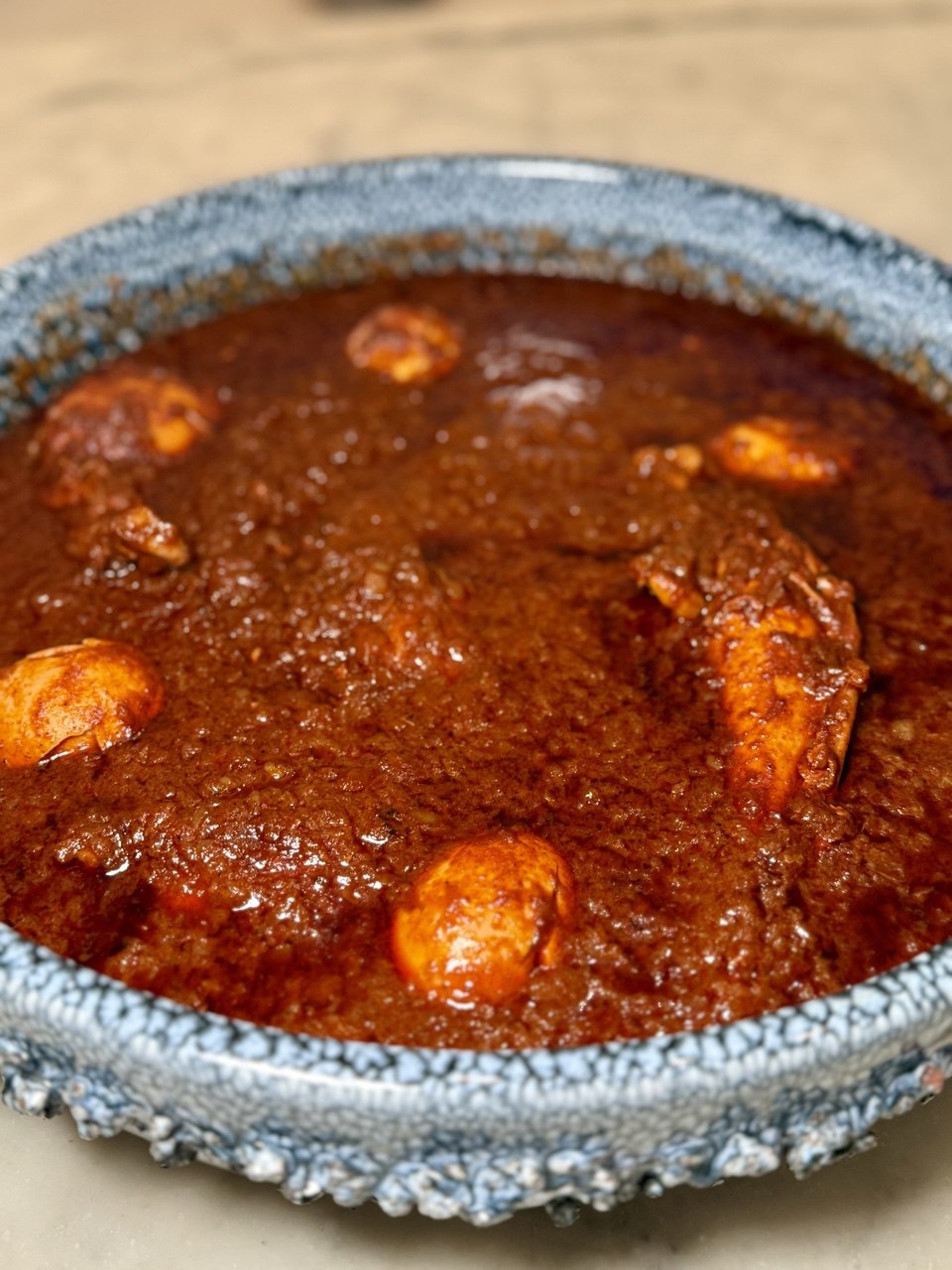
If you’ve ever tried making Doro Wot, here is a Quick and Delicious Instant Pot Doro Wot Recipe
Bozena Shiro (ቦዘና ሽሮ): A Flavorful Ethiopian Delight
Discover the authentic taste of Ethiopia with our delicious Bozena Shiro recipe! This hearty dish co