
How to Brew Coffee the Ethiopian Way: A Step-by-Step Guide to the Traditional Coffee Ceremony

July 7, 2026
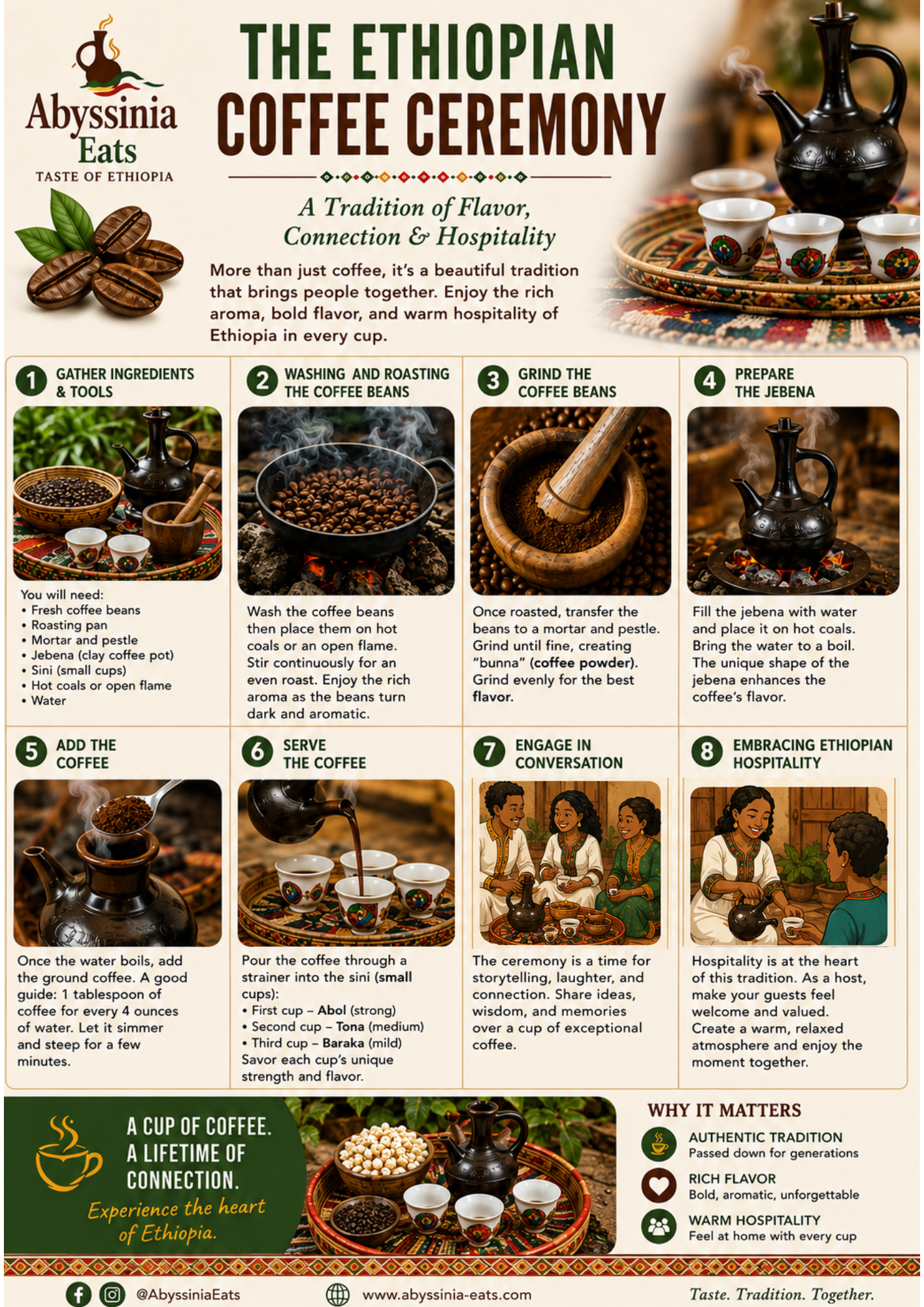
Coffee is more than just a drink in Ethiopia—it’s a tradition, a celebration, and a way of bringing people together. As the birthplace of coffee, Ethiopia has preserved a centuries-old brewing ritual known as the Ethiopian coffee ceremony. Unlike modern coffee makers that brew a cup in minutes, this ceremony is a slow, meaningful experience where every step is performed with care, from washing the beans to serving the final cup.
Whether you’re a coffee enthusiast or simply curious about Ethiopian culture, learning how to brew coffee the Ethiopian way is a rewarding experience. The rich aroma of freshly roasted beans, the sound of coffee grinding by hand, and the warm conversations shared during the ceremony make it one of the world’s most unique coffee traditions.
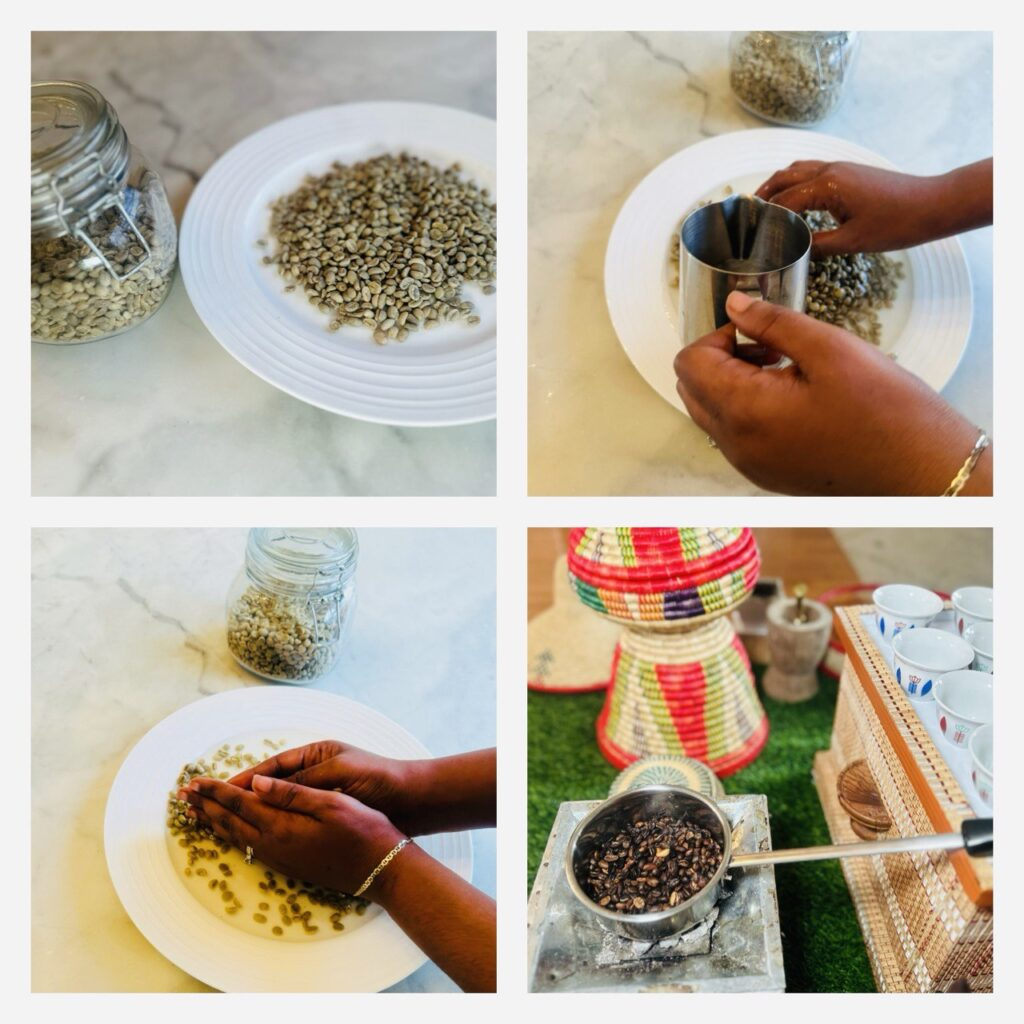
Step 1: Wash the Green Coffee Beans
The ceremony begins with fresh green coffee beans. The beans are carefully washed to remove dust and any impurities before roasting. This simple step helps ensure a clean, fresh flavor.
Step 2: Roast the Coffee Beans
The washed beans are roasted in a flat pan over medium heat while being stirred continuously. As they roast, they gradually change from green to golden brown and finally to a rich dark brown. The delicious aroma fills the room, and it is customary for the host to gently wave the roasting pan so guests can enjoy the fragrance.
Fresh roasting is one of the secrets behind the bold flavor of Ethiopian coffee.
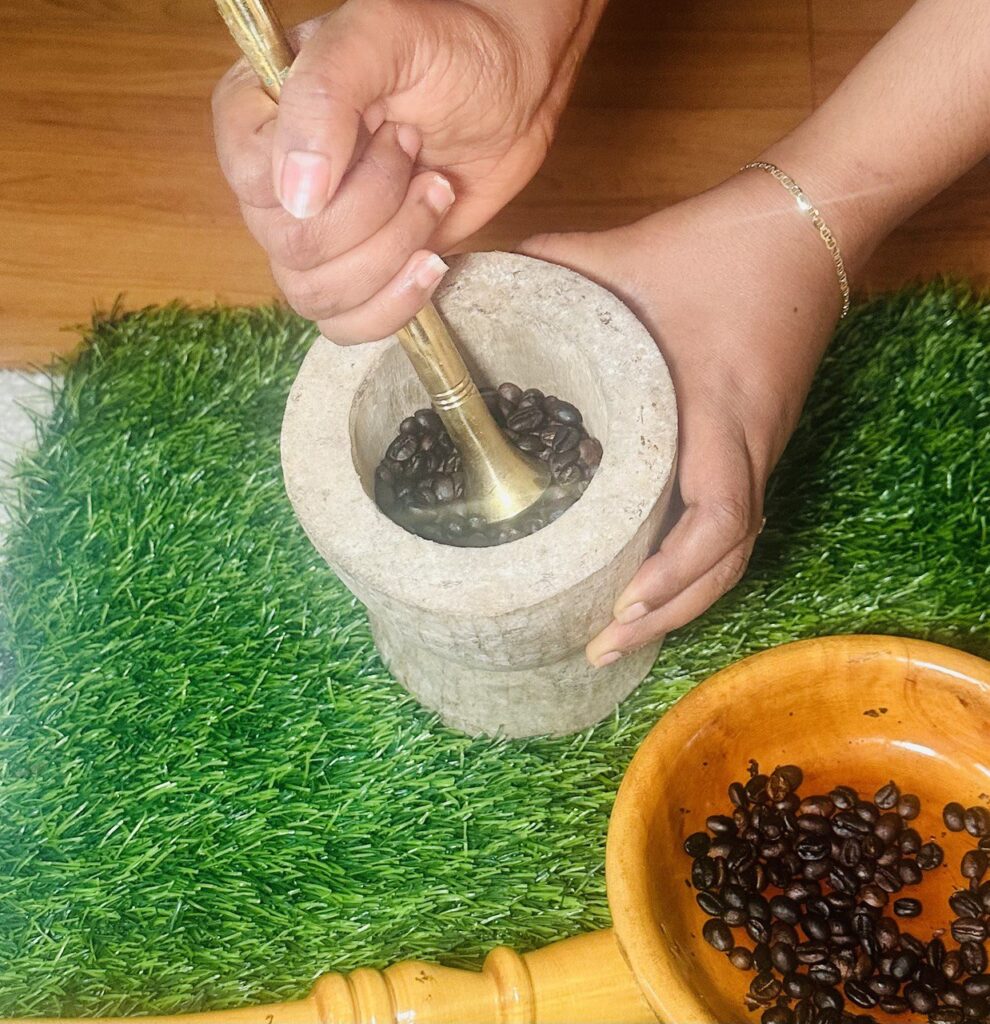
Step 3: Grind the Coffee
Once roasted, the beans are allowed to cool slightly before being ground. Traditionally, this is done using a wooden mortar and pestle, producing a medium-fine grind that is perfect for brewing.
Freshly ground coffee creates a richer aroma and fuller flavor than pre-ground coffee.
Step 4: Brew in a Jebena
The ground coffee is placed inside a jebena, a traditional Ethiopian clay coffee pot. Fresh water is added, and the coffee is slowly heated over charcoal or a small stove until it reaches a gentle boil.
The jebena gives Ethiopian coffee its distinctive flavor and remains an important symbol of Ethiopian hospitality.
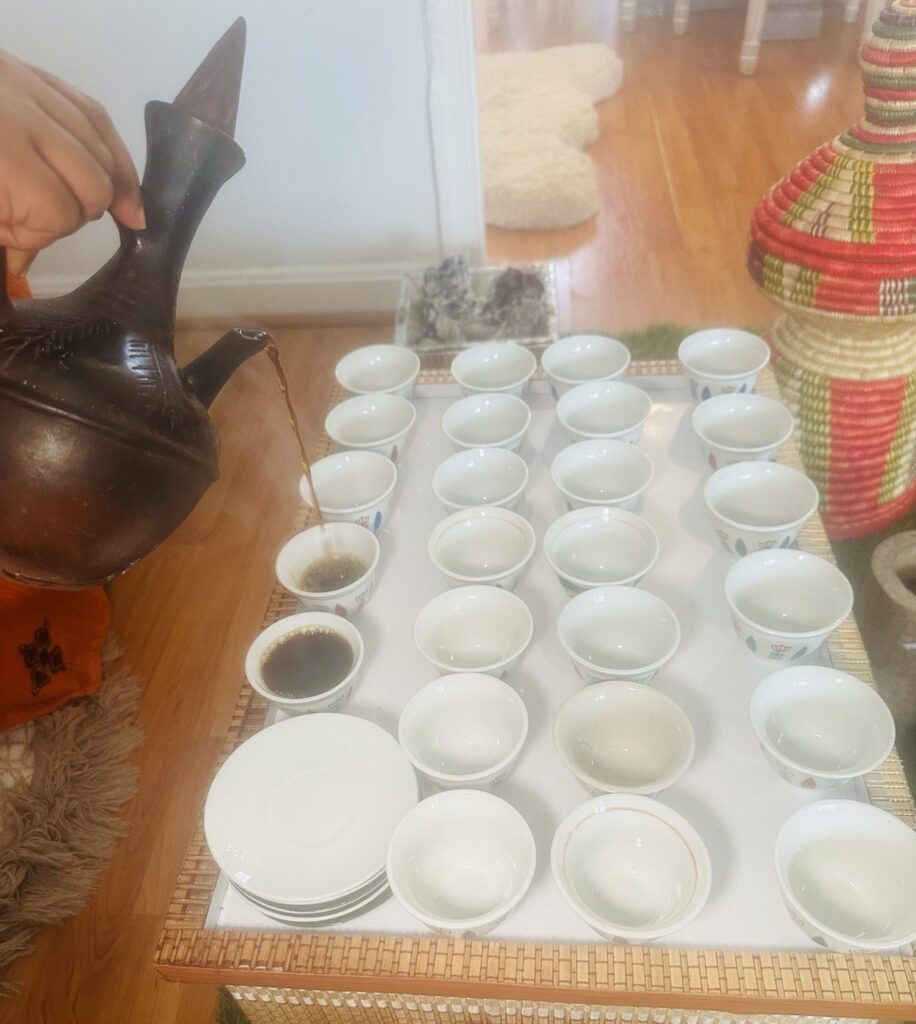
Step 5: Pour the Coffee
When the coffee is ready, it is carefully poured into small handleless cups from a height. This traditional pouring technique helps separate the coffee grounds from the brewed coffee while creating an elegant presentation.
Sugar is often served alongside the coffee, while some regions also enjoy it with salt or butter.
What to Serve with Ethiopian Coffee
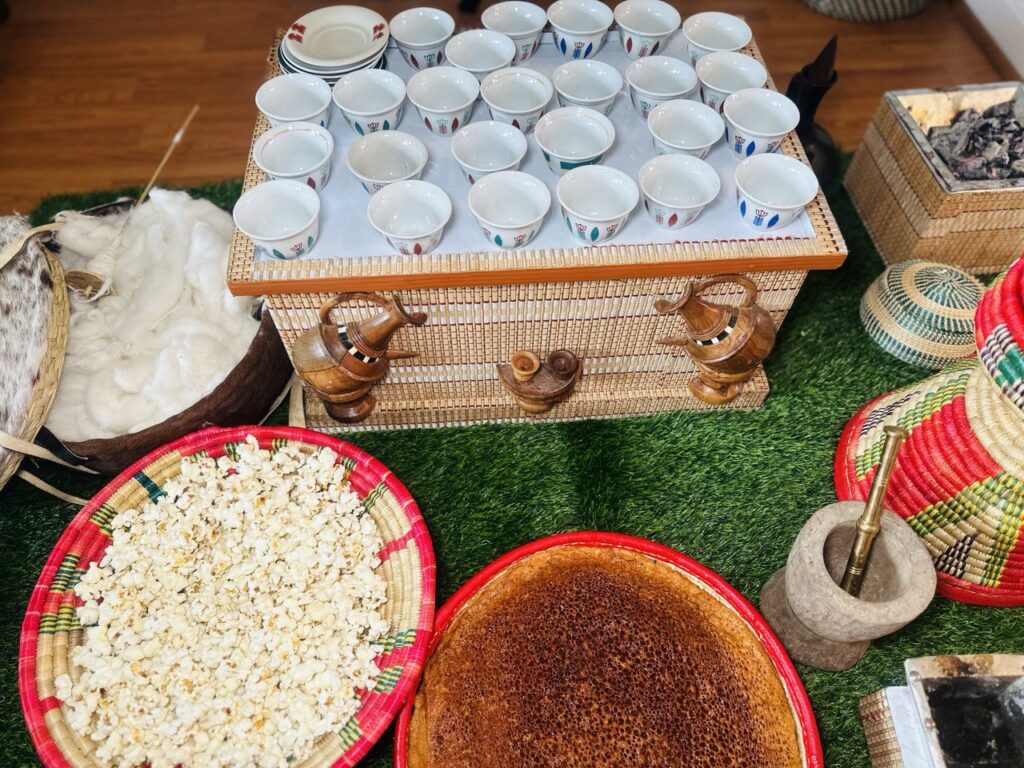
Coffee is often enjoyed with small traditional snacks such as:
- Popcorn
- Kolo (roasted grains)
- Bread
- Traditional Ethiopian pastries
These simple treats complement the rich flavor of freshly brewed coffee.
Why Ethiopian Coffee Is So Special
Ethiopian coffee stands apart because it is prepared fresh from bean to cup during every ceremony. Combined with Ethiopia’s world-famous coffee varieties and the tradition of gathering loved ones together, every cup becomes more than just a beverage—it becomes an unforgettable experience.
Whether you’re hosting friends or enjoying a quiet afternoon at home, brewing coffee the Ethiopian way allows you to slow down, appreciate the moment, and experience one of the world’s richest coffee traditions.

Conclusion
Learning how to brew coffee the Ethiopian way is about embracing a tradition that has brought people together for generations. From roasting fresh beans to pouring the final cup, every step reflects Ethiopia’s deep respect for coffee, hospitality, and community.
If you’ve never experienced an Ethiopian coffee ceremony, now is the perfect time to try it. Gather your family and friends, brew a fresh pot of coffee, and discover why Ethiopia’s coffee tradition continues to captivate coffee lovers around the world.

Enkulal Firfir: Simple, Healthy, and Delicious Ethiopian Breakfast
Enkulal Firfir, a traditional Ethiopian scrambled egg dish that is both simple and delicious! Packed

Chechebsa: A Beloved Ethiopian Breakfast Delight
Chechebsa, also known as Kita Firfir, is a cherished breakfast dish in Ethiopia that combines torn f

Enkulal Sils: A Traditional Ethiopian Breakfast Recipe
Discover the authentic flavors of Ethiopia with our Enkulal Sils recipe. This traditional breakfast